The Regions of Canada Deserve Their Data
Article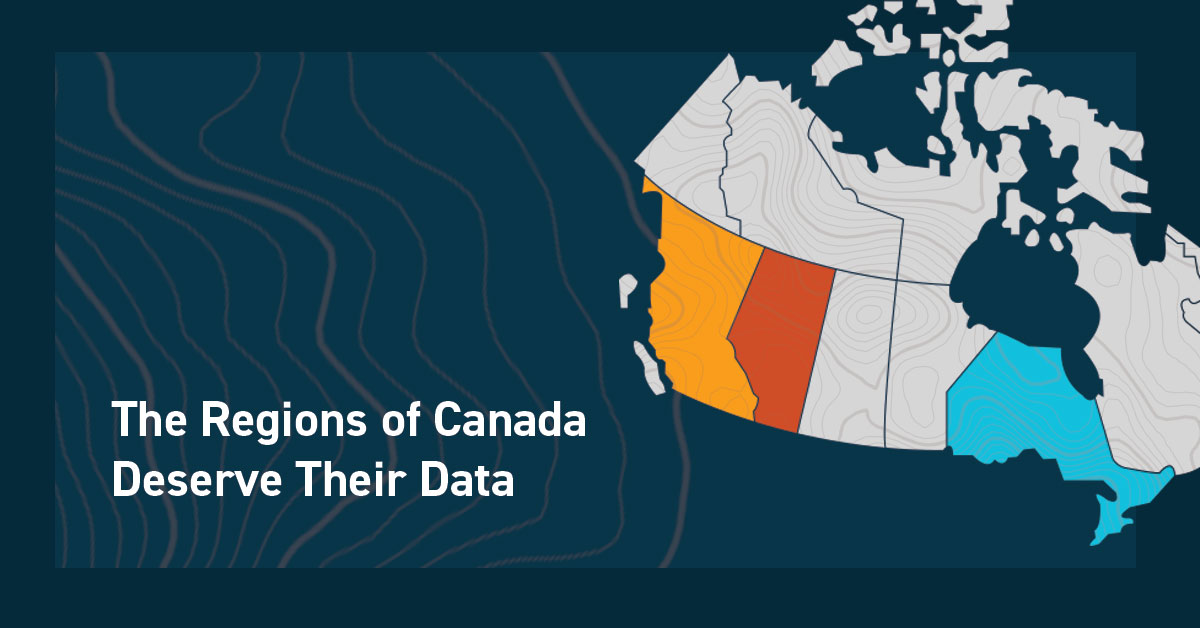
Canada is not one environment. It is a mosaic of regions: prairies that stretch flat and endless, forests pressed against rivers, cities built on layers of history. Each carries its own record of land use and legacy, often buried within archives or agency files that surface only when needed.
Environmental data in Canada is strong, built on decades of regional experience and oversight. What varies is how easily that information can be obtained. Each province holds its own story. Ontario’s depth of historic record. Alberta’s focus on resource and reclamation. British Columbia’s attention to the balance between development and environment. The opportunity lies in making that data easier to reach, relevant to the moment, and reflective of what is current rather than what is simply kept.
In the United States, this framework has been in place for decades. If you need to know what has touched a parcel of land, the data is there to find, interpret, and act on. Canada is reaching that same point of alignment, where development and due diligence depend on seeing the full picture before the work begins.
At Envirosite, we believe environmental data should be accessible and practical, not layered in complexity. Due diligence is not a task to complete but a way of seeing risk before it becomes liability. In 2025, we begin expanding that vision into Canada.
This is more than geography. It is the start of a continental approach to environmental clarity.
Ontario (2025): Where Layers Meet Density
Ontario is the natural place to begin. Its urban core is dense, its industrial history deep, and its redevelopment rapid. Toronto, Hamilton, Ottawa: each city is built on layers of past use. Factories once stood where new towers now rise. Fuel leaked into soil that has since been covered and paved. Land records stretch back more than a century.
The challenge in Ontario is not a lack of data, but its fragmentation. Historic records exist, but they are scattered across municipalities, agencies, and archives. The risk isn’t always obvious until a project is underway. By curating and verifying those records into a coherent whole, Envirosite helps decision-makers see the story of a property before it interrupts construction, financing, or compliance.
Ontario represents the tension between opportunity and legacy. Growth is visible in every skyline. So is the need to ask: what lies beneath?
Alberta (2026): Where Resources Shape the Horizon
By early 2026, our goal is to expand west into Alberta. Here the environment carries a different imprint. This is a region defined not by density but by scale: vast lands tied to agriculture, extraction, and development.
In Alberta, environmental due diligence is less about what was built and more about what was taken, stored, or reclaimed. Oilfields, agricultural zones, and sprawling suburban growth all bring questions of long-term land health. For a lender, it might mean understanding liabilities hidden in a reclamation project. For a developer, it might mean measuring proximity to past industrial operations that never fully disappeared.
The story of Alberta is about horizons. Open, expansive, and full of potential. But every horizon holds a history. Environmental data makes that history visible.
British Columbia (2026): Where Land Meets Water
By mid-2026, our data will span all the way west, to British Columbia. Here the question changes again. BC is a province defined by its meeting points: mountains that drop into rivers, rivers that lead to coastal cities. Development here is often a story of thresholds. Where land use touches water. Where forests press against urban growth. Where climate risk accelerates environmental complexity.
For Vancouver, Victoria, and the communities between, environmental due diligence is inseparable from resilience. Flood risk, rising water levels, and the legacy of industrial use along rivers and ports create a mix of old and new concerns. Our role is to provide data that does not just confirm history, but anticipates what might come next.
British Columbia shows why environmental due diligence must be regional. It is not enough to know what worked in Ontario or Alberta. Coastal provinces have their own set of questions, their own thresholds to measure.
Toward a Continental Framework
As Envirosite expands into Ontario, then Alberta, then British Columbia, the vision is not to replicate what exists in the United States. It is to create a framework that works across borders. Because contamination does not stop at a line on a map. Neither does liability.
Envirosite’s framework of environmental data will span Canada in 2026, connecting every region through shared visibility and trust.
The future of environmental due diligence is not fragmented by country. It is unified by need. North America deserves one ecosystem of data that enables confident, informed decisions whether a project is in Buffalo, Calgary, or Vancouver.
That is the path forward. And it begins with bringing the regions of Canada into view, not as blank spaces on a map but as landscapes rich with record, history, and potential. Canada is not catching up. It is opening up. Every region, every river, every prairie, every coastal city deserves to be seen in full. And with Envirosite, that clarity is no longer out of reach.
Did you know?
If you’re looking to optimize your resilience and sustainability efforts, tools like Envirosite’s Atlas and Property Risk Map provide comprehensive solutions for discovering, evaluating, and monitoring environmental risks associated with property and site development. By leveraging these tools, companies can gain actionable insights into potential environmental liabilities, ensuring that their projects are not only compliant but also aligned with best practices of environmental stewardship. Learn More >>